


On 12 March 2026, the city of Mostar hosted the kick-off conference of the project ROOT WB – Regional Ownership of Our Tomorrow, an initiative aimed at strengthening civic participation and promoting European values across the Western Balkans.
The conference, titled “Europe for Citizens – Values That Connect Us”, organized by Local Democracy Agency (LDA) Mostar, brought together over 70 participants – representatives of institutions and civil society organizations from Bosnia and Herzegovina, Albania, Croatia, Montenegro, Serbia, North Macedonia, and France. The project is supported by the European Union through the Citizens, Equality, Rights and Values (CERV) program, situating it within the broader framework of EU policies for strengthening democracy and civic rights.


Civic Engagement in Focus
A central message of the conference was the need for citizens to take an active role in shaping democratic processes rather than remaining passive observers. This approach represents a shift from formal to substantive democracy, emphasizing daily citizen participation in decision-making.
Dženana Dedić, Director of LDA Mostar, highlighted that European integration does not happen solely at the institutional level and stressed that solutions to shared challenges lie in cooperation rather than isolation:
“When we speak of ‘regional responsibility,’ we mean that our problems often share the same root causes. Citizens are not just observers—they are the main architects of change. Our goal is to strengthen the synergy between government and civil society because European integration does not happen only in Brussels, but here, on the ground.”
Miroslav Landeka, representing the City of Mostar and the Mayor’s Office of Dr. Mario Kordić, welcomed the participants and emphasized the importance of strong connections between local authorities and civil society as a foundation for sustainable change.


Jelena Krešić, ROOT WB Project Coordinator, presented the project’s vision, objectives, and regional relevance. She underlined the importance of bringing European values to the local level and fostering democratic participation, particularly emphasizing regional cooperation as essential for stability and the exchange of good practices.
Regional Cooperation to Address Shared Challenges
ROOT WB holds particular significance given the challenges faced by civil society in the region. The conference highlighted the need for systematic efforts to strengthen civic participation and encourage interregional exchange of experience.
Participants identified key obstacles, including insufficient institutional openness, limited public awareness, and the absence of unified civil society organization registries. Successful regional cooperation was also noted to require the removal of administrative and political barriers, such as movement restrictions related to Kosovo*, the influence of front organizations, and clientelist practices.


Strategic networking was recognized as essential for long-term success – regional cooperation must go beyond individual projects and build lasting networks, including countries such as Croatia, which can share valuable lessons from the EU accession process. Empowering local communities and “bottom-up” initiatives by addressing tangible issues (climate change, migration, youth engagement) and linking organizations with real impact is crucial for sustainable outcomes.
At the same time, participants emphasized the need for greater involvement of experts in decision-making processes, which, combined with enhanced cross-sectoral and cross-border cooperation, can transform challenges into opportunities for democratic development and civic engagement.
From Idea to Practice: Inspirational Examples of Participation
The second panel showcased practical examples, including projects aimed at protecting civic rights, engaging youth in societal processes, and promoting local development. These cases demonstrated how civic participation can have a direct and measurable impact on communities.


Interactive World Café sessions further facilitated the exchange of experiences and innovative solutions, particularly in the areas of youth and women’s engagement, safeguarding civic space, and cross-border initiatives. This approach highlighted the practical dimension of the project and showed how ideas can be effectively implemented in daily life.
Local Context and European Values
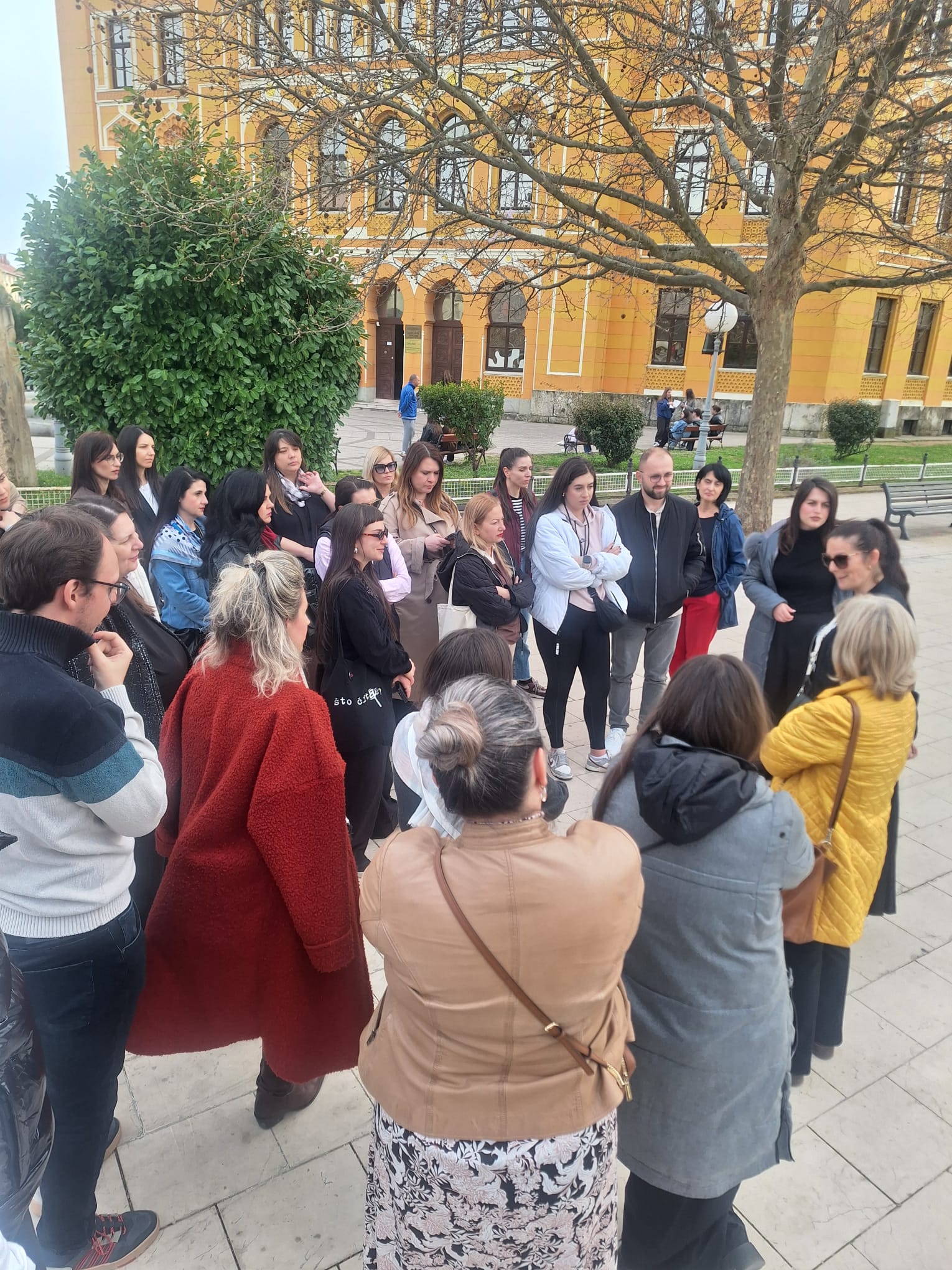
The conference concluded with a cultural walking tour, “Paths of Invisible Women of Mostar”, which highlighted the often-overlooked role of women in the city’s history and societal processes. This initiative provided an inspiring local example of resilience, inclusion, and empowerment, while connecting local stories to European values such as equality and inclusiveness.


Towards Sustainable Participatory Democracy
ROOT WB demonstrates how regional and local initiatives can serve as a model for sustainable participatory democracy. The project provides not only a platform for dialogue but also a framework for concrete actions and projects that engage citizens in shaping the future of their communities, showing that active participation can have a real societal impact.
The project is implemented with the support of the European Union through the Citizens, Equality, Rights and Values (CERV 2021–2027) program, and is carried out by Local Democracy Agency (LDA) Mostar in partnership with: NALAS (France), CEDEM (Montenegro), ACT Centre (Albania), BCSP (Serbia), LDA Sisak (Croatia), EMMK (North Macedonia), and ALDA (France).
The project runs from 1 January 2026 to 31 December 2027, with a total budget of €342,775.00.


