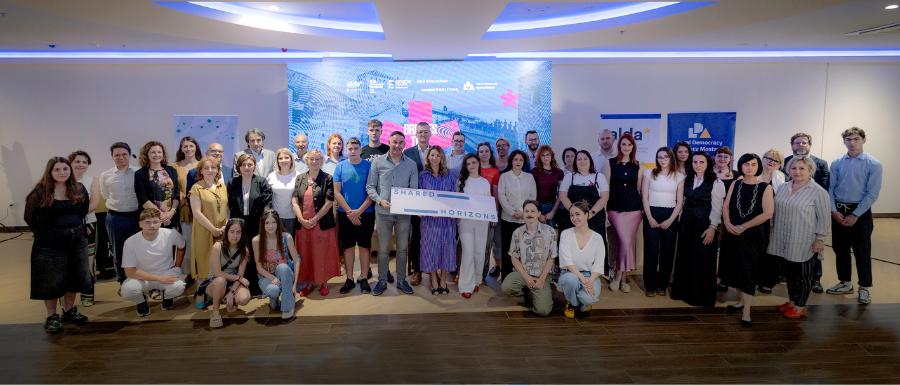
The international conference “Bridges that Connect” was held from 10 to 12 June 2026 in Mostar, Bosnia and Herzegovina, within the framework of Component 2 of the Shared Horizons project. The conference participants—representing the ALDA network, civil society organisations, local authorities, cultural institutions, youth, as well as experts and researchers from across the Western Balkans and beyond—jointly adopted a statement highlighting the importance of cultural heritage, regional cooperation, and the inclusion of young people in reconciliation processes. We are delighted that the Local Democracy Agency (LDA) Mostar was part of this story, contributing to the success of this international event with our knowledge and field-based experience.
Key messages of the statement:
- Cultural heritage as a connecting factor: Cultural heritage, its sites, traditions, and living memory are not sources of division, but a foundation upon which we can build together. When communities come together around shared spaces and narratives, reconciliation becomes attainable.
The importance of local action: Meaningful change begins at the community level. Investing in local initiatives that address heritage, memory, and civic engagement is essential for building stable and democratic societies.
Young people are the present, not just the future: This conference demonstrated that young people are already actively building bridges through dialogue, art, and an honest engagement with history. Consequently, their energy and ideas deserve a meaningful place in policy-shaping and decision-making processes.
European integration as a shared responsibility: The path toward EU membership is not merely a technical or political process. It is deeply rooted in core values: democracy, human rights, the rule of law, and the recognition of a shared history.
Continuous regional cooperation: Exchanges, workshops, and dialogues should not be isolated, one-off events. Platforms for regional learning must become an integral part of how the region moves forward.
Memorial tourism in the service of development: When local communities are placed at the centre of the development and interpretation of memory sites, memorial tourism can become a powerful driver of both reconciliation and sustainable local development.
The participants call on local governments, civil society organisations, cultural institutions, regional bodies, and European partners to continue investing in initiatives that utilise heritage and culture as a bridge between communities, generations, and between where the Western Balkans stands today and its vision for a better future.
The full text of the Concluding Statement of the “Bridges that Connect” conference can be read here.