New Research on Civic Participation and the State of Civil Society: 79.5% of CSOs in BiH Experience Unstable Funding, and 53.6% Have Only a Partial Impact on Decision-Making Processes.
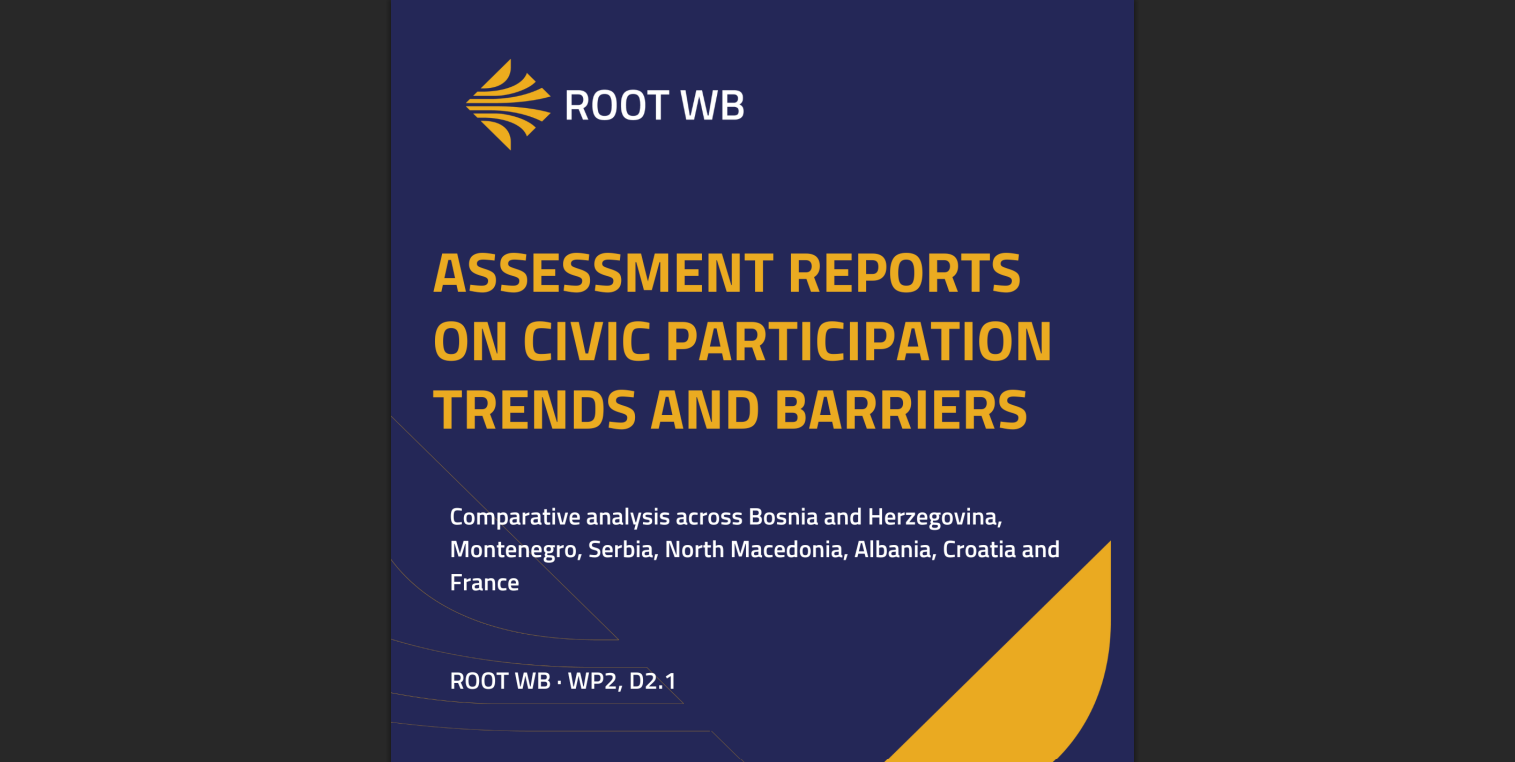
Funding instability and the limited impact of civil society organisations on public policy-making continue to represent key challenges in Bosnia and Herzegovina and the region, according to a new regional study that surveyed 291 organisations across the Western Balkans and the EU.
According to the research findings, 79.5% of civil society organisations (CSOs) in BiH report unstable funding, which is the second-lowest result in the region. Concurrently, 66.7% of organisations depend entirely on international donors, indicating a high degree of financial vulnerability within the sector.
The research was conducted within the framework of the regional project “ROOT WB – Regional Accountability for Our Future: Citizens and Civil Society Strengthening European Values in the Western Balkans”, co-funded by the European Union through the CERV (Citizens, Equality, Rights and Values) programme, led by the Local Democracy Agency (LDA) Mostar.
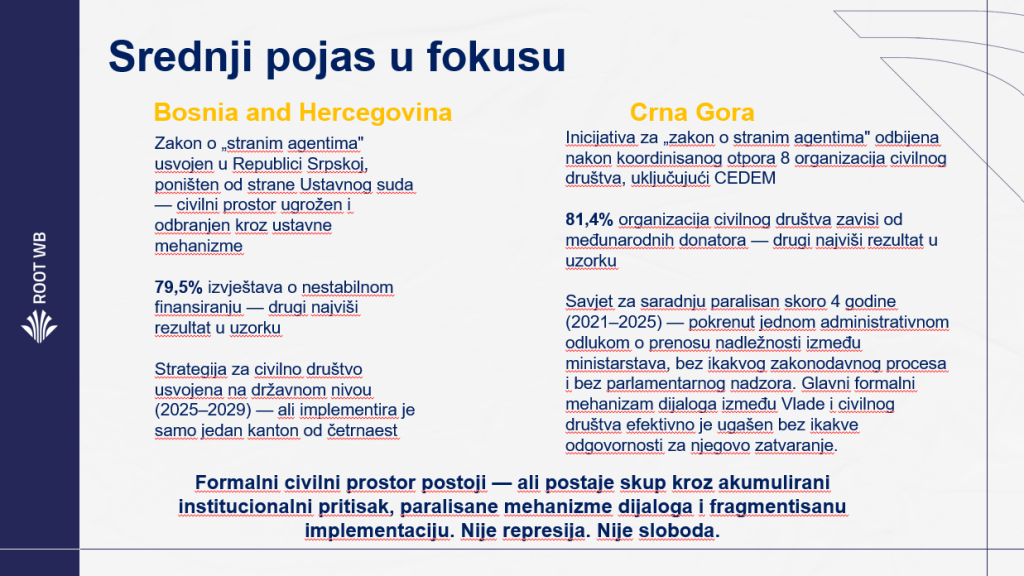
The findings further indicate that 53.6% of organisations believe their participation in public policy processes leads only to partial changes, whereas consultations most frequently take place in the late stages of the process, without binding feedback from institutions. According to the study, this practice creates a vicious circle wherein the trust of citizens and organisations in institutional processes gradually diminishes.
With the aim of validating and further deepening the research findings, a series of online panel discussions was organised as part of the publication's launch, bringing together representatives from both the non-governmental and governmental sectors, institutions, and the expert public from across the region.
One of these events was organised by the Local Democracy Agency (LDA) Mostar, as the lead project partner, on Thursday, 18 June. The online panel discussion titled “Civic Pulse BiH: Citizens, Civil Society, and Institutions – Who Drives Change?” brought together nearly 50 representatives from civil society and institutions, serving as a platform to present and discuss the research findings within the context of BiH.
During the panel discussion, a specific focus was placed on institutional mechanisms for civic participation. Vildan Hadžihasanović, Expert Advisor at the Department for Legal Aid and Civil Society Development of the Ministry of Justice of BiH, noted the importance of the e-Consultations platform, emphasizing that criticisms in this process are bidirectional.
While institutions complain about the insufficient engagement of CSOs, organisations point out the lack of substantive initiatives for participation. It was highlighted that the key mechanism for bridging this gap lies in transparent monitoring through follow-up reports, in which each institution provides a reasoned justification on how it responded to the comments and initiatives submitted by CSOs.
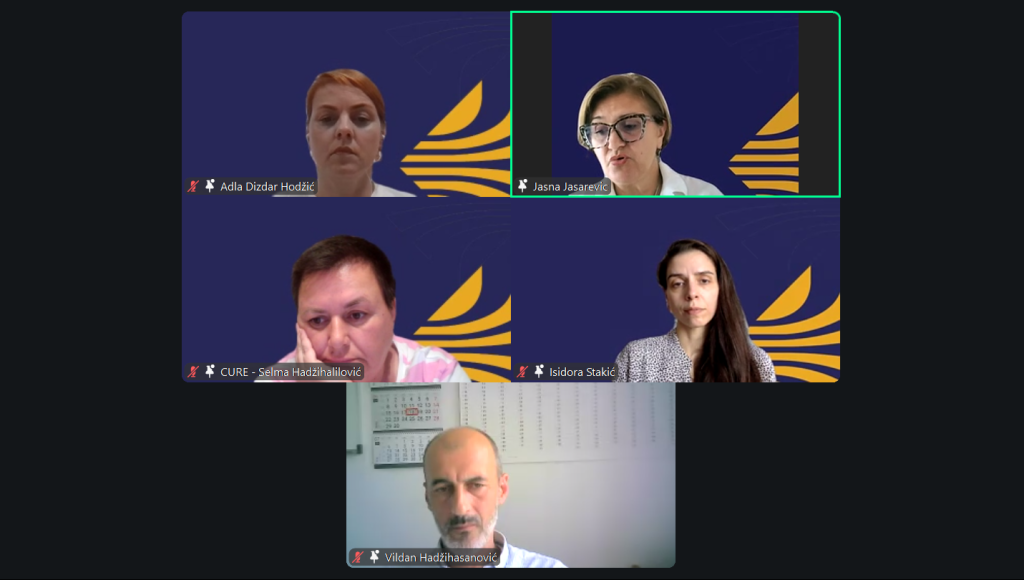 Panelist Jasna Jašarević, Director of the Tuzla Community Foundation, stressed that stability and continuity of work are key to long-term empowerment and maintaining citizens’ trust. Although the Council of Ministers of BiH Strategy for Creating an Enabling Environment for Civil Society Development 2025–2029 has been adopted at the state level, its full implementation across all levels of government remains a crucial step toward creating conditions for the sustainable work of organisations.
The panelists also pointed out that the space for effective participation cannot be regulated solely by government decrees, but rather through inclusive and legally regulated processes starting with the precise definition and categorisation of social groups, ensuring that all citizens have an equal and secure space to participate in decision-making.
Bosnia and Herzegovina belongs to a group of countries where a formal space for civil society action exists, but is burdened by implementation challenges, fragmentation, and insufficiently developed feedback mechanisms in decision-making processes. Although institutional tools such as public consultations and e-participation platforms are available, the key challenge remains their consistent and qualitative application.
To provide a comparative overview, Isidora Stankić from the Belgrade Centre for Security Policy (BCSP) contributed to the panel by drawing a parallel between the challenges faced by organisations in BiH and Serbia, including attempts to introduce restrictive laws (such as the Law on the Special Register and Public Nature of the Work of Non-Profit Organisations in Republika Srpska, which was annulled by the Constitutional Court) and increasingly frequent digital pressures on activists.
The example of civic mobilisation in Serbia was also highlighted, where students self-organised and became one of the most relevant social groups, demonstrating the power of civic initiatives and civic engagement. This example was further contextualised within the research findings, according to which Serbia records the highest level of civic participation in the region, standing at 3.11.
Panelist Selma Hadžihalilović from the CURE Foundation concluded that the core of civil sector action lies in creating safe spaces, developing communication, and maintaining a presence on the ground, thereby restoring and retaining civic trust.
The ultimate message of the panel is that a relationship based on partnership, rather than a mere client-beneficiary dynamic, between civil society and institutions must be built continuously and strategically, to ensure that the voice of citizens forms the foundation of every future public policy.
Please note that the research report is currently available in English, while translations into local languages will be provided in the upcoming period.