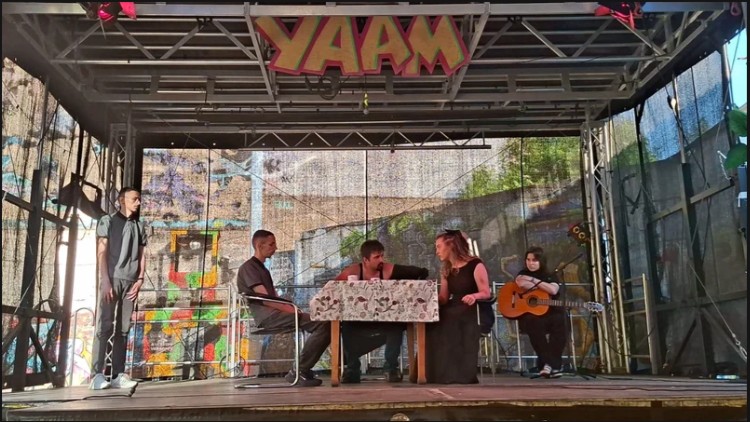
The significance of the project “PIROUETTE Phase 2 – CreARTive Community,” implemented by the Local Democracy Agency (LDA) Mostar, lies in its capacity to transform the authentic voice of Mostar's youth into a powerful global message. It proves that through art and activism, boundaries are erased, and shared problems are addressed through solidarity that transcends geographical borders.
It was precisely within this synergy of stage movement and social activism that “The Cell” (“Ćelija”) was born—a striking performance through which five young people gave their voice to one of the most pressing and difficult topics of today: domestic violence and femicide. This artistic cry received its international validation in Berlin, on a European stage that served as a meeting point for a Youth Exchange. This exchange brought together 30 young people from six countries—Bosnia and Herzegovina, Serbia, Montenegro, Germany, Ireland, and Kosovo. Performing in front of their peers, the youth from Mostar demonstrated how local resistance to silence can become a universal language of awareness.
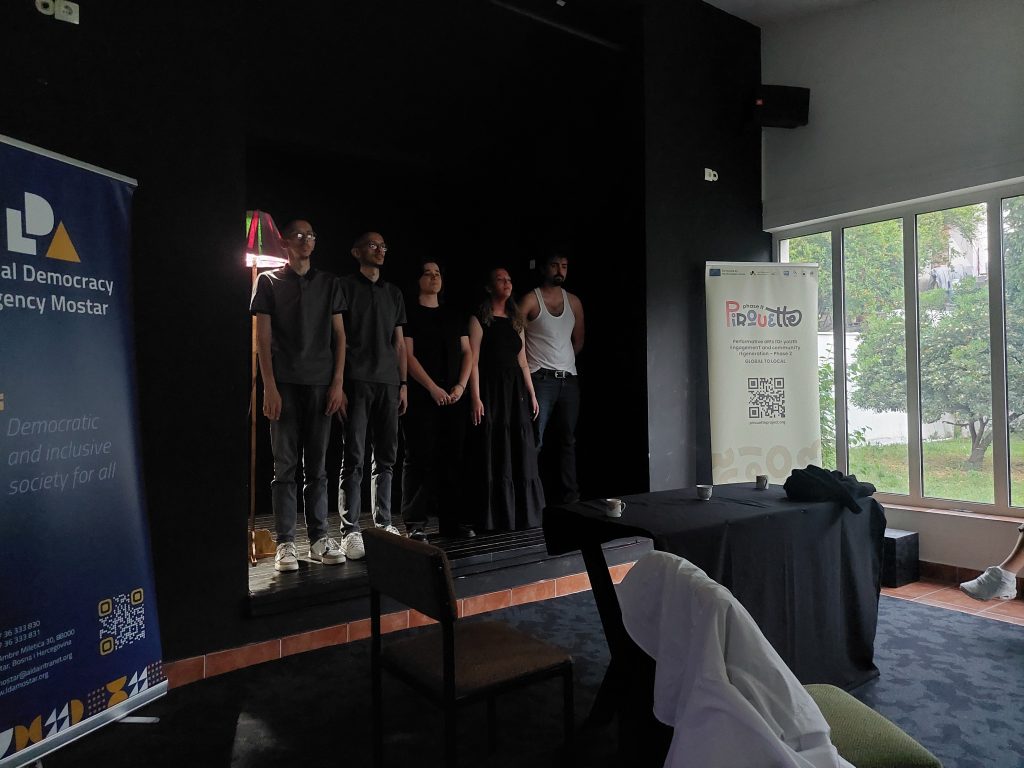
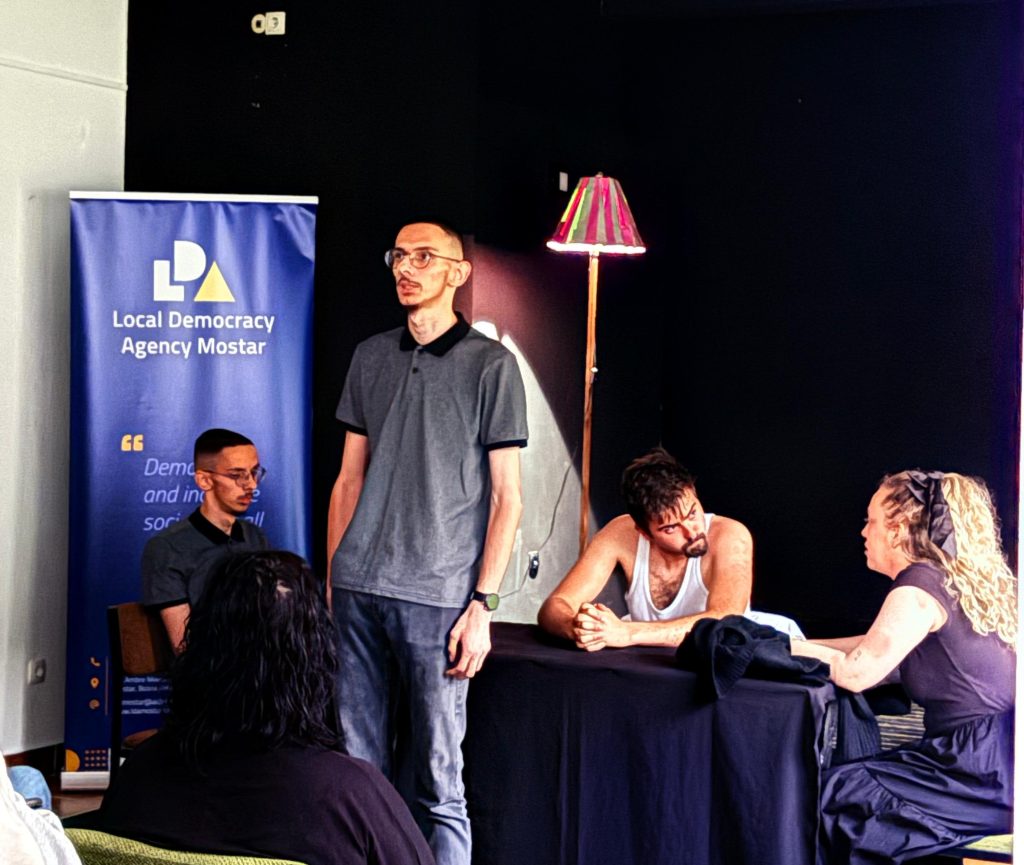
Their performance in Berlin was preceded by the premiere of “The Cell” on May 15, presented to a local audience at the “Karel Čapek” Small Stage in Mostar. The performance came as the crowning achievement of a months-long process of researching current social themes, analyzing artistic expression, and channeling the visions of these young people.
From Research to the Stage: A Months-Long Transformation Process
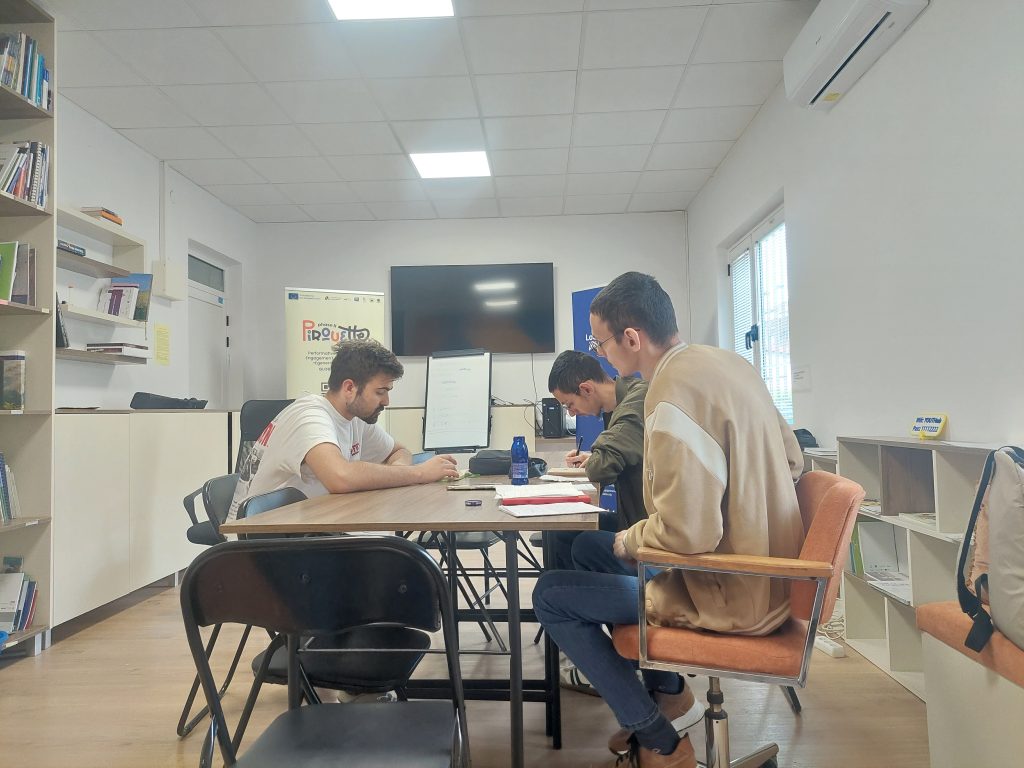
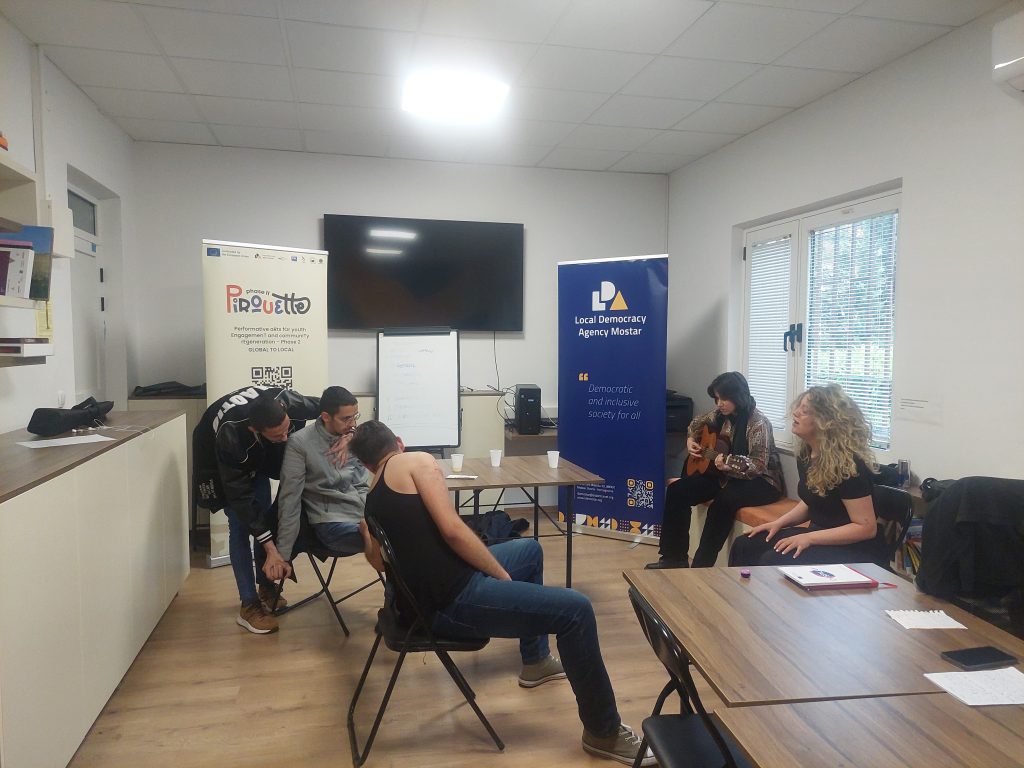
It is important to emphasize that “The Cell” is not an isolated artistic production, but rather the result of a months-long, structured process within the PIROUETTE Phase 2 project. The entire journey was developed according to a methodology based on the “Performing Change” manual, which innovatively links non-formal education with the performing arts.
Before stepping under the spotlights for the first time, the participants went through intensive phases of learning, research, and empowerment through the lens of global education. They did not focus on abstract concepts; instead, through focus groups and a careful assessment of their community's needs, they identified the painful issues that their environment shares with the world—such as heavy societal silence and the invisible threads of violence. Consequently, the Global Art Fusion workshops were a crucial part of the process, allowing the youth to use artistic techniques to develop concrete stage material based on their previously acquired knowledge.
From Strangers to a Unified Voice with LDA Mostar's Support
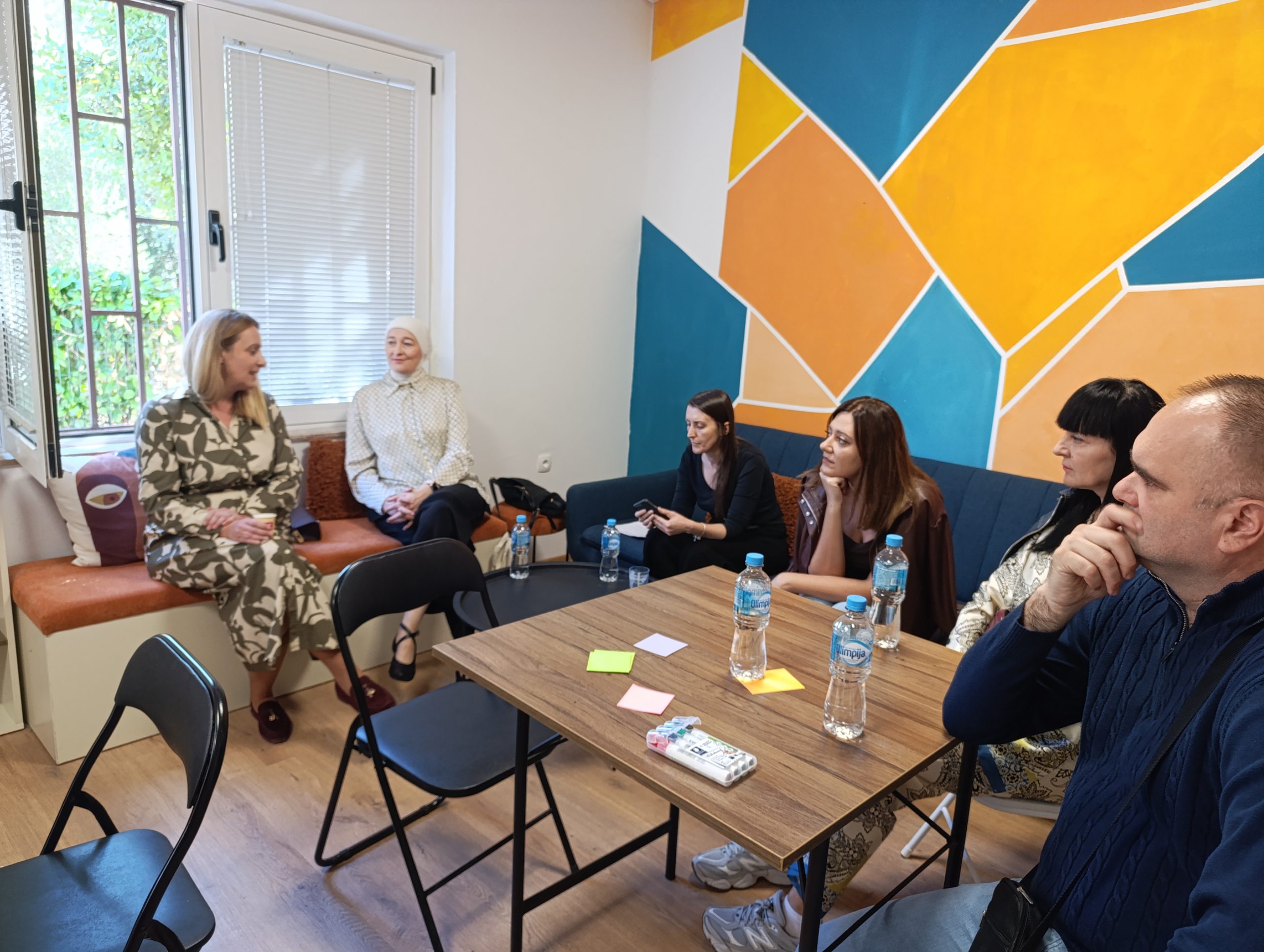
What makes “The Cell” even more compelling is the fact that the performers did not know each other before the project began. Through this initiative by the Local Democracy Agency Mostar, these young people—who had previously completed trainings and local workshops—were provided with a safe space to channel their creative energy. They built the trust required to speak out on a topic that demands raw honesty, proving that art has the power to unite youth visions.
Unlike traditional theatrical forms, audiences in both Mostar and Berlin had the opportunity to see a piece authored exclusively by the young participants themselves. They explored the symbolism of the “cell”—ranging from the family cell, which ought to be a sanctuary, to the systemic cells of silence that lead to tragic outcomes. The PIROUETTE 2 project, by utilizing performing arts as a tool for non-formal education and social engagement, served as the perfect vehicle to translate their visions into a highly impactful performance.
A Global Message from Mostar
The performance of “The Cell” left a clear message: when young people are given the opportunity, mentorship, and structured education, they are not just bystanders, but conscious actors ready to demand change. Their voice is a reminder that the fight against femicide begins the moment we choose to replace darkness with the light of truth. This work carries a powerful international dimension, as universal themes of gender-based violence speak through the voices of Mostar's youth.
The project is implemented by a consortium of six partners from the Western Balkans and the European Union, and is co-funded through the Erasmus+ program.

Funded by the European Union. Views and opinions expressed are however those of the author(s) only and do not necessarily reflect those of the European Union or the European Education and Culture Executive Agency (EACEA). Neither the European Union nor the EACEA can be held responsible for them.